

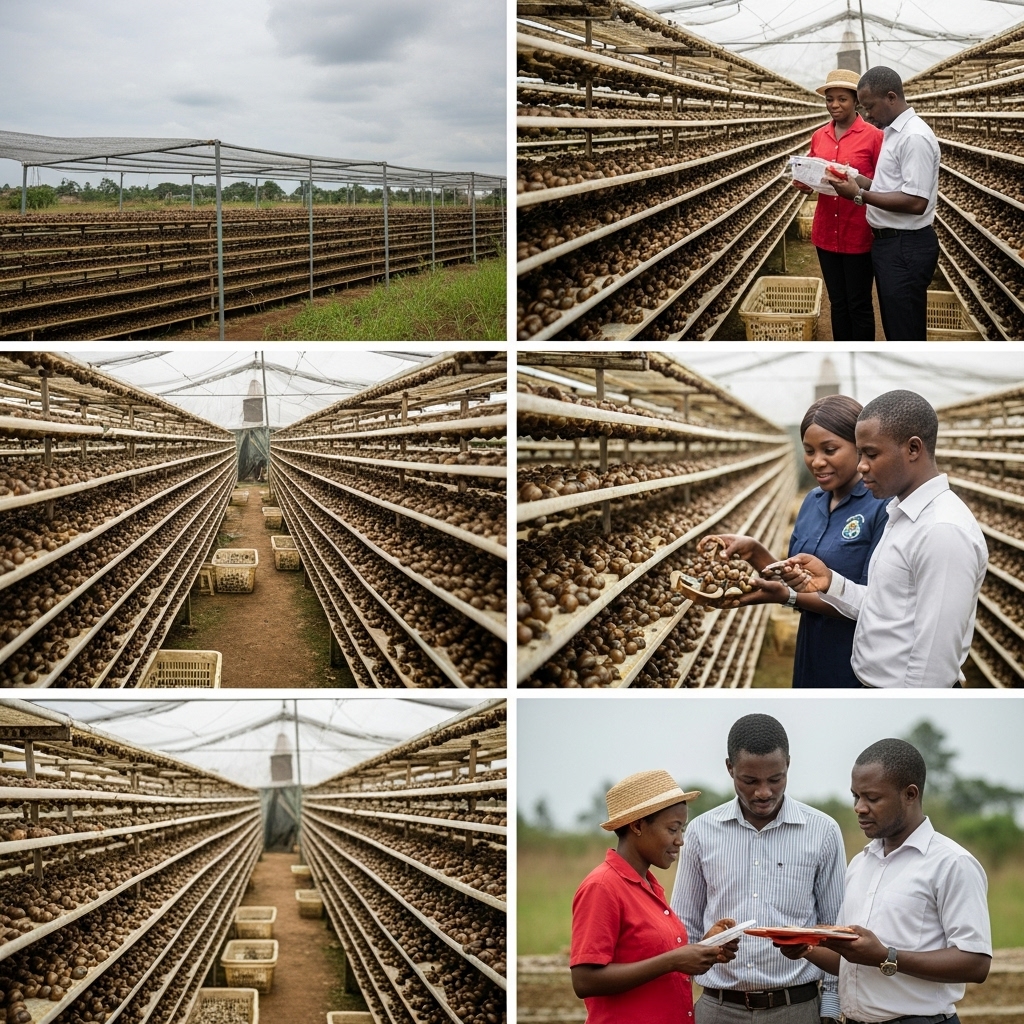
Market Intelligence on Nigeria’s Emerging Heliculture Value Chain and EU Demand Trends
Nigeria’s snail farming industry is gaining fresh momentum in 2025, driven by rising global demand for edible snails, innovations in heliculture, and renewed interest from European markets. With consumption increasing across EU culinary, cosmetic, and pharmaceutical sectors, Nigeria is positioning itself as a vital future supplier. The leading snail producing states in Nigeria includes; Ogun, Oyo, Ondo, Delta, Edo, Rivers, Enugu. These states dominate due to humidity levels, vegetation, and strong agribusiness activity. This article highlights the latest updates on snail farming in Nigeria, global market insights, and how EU–Nigeria trade can be expanded for shared prosperity.
📌 Snail Farming News & Developments in Nigeria
Recent market assessments and sector monitoring shows;
1. Rising Local Production & Growing Export Interest
Nigeria remains one of Africa’s fastest-growing snail-producing countries, supported by expanding farms in Ogun, Oyo, Ondo, Edo, Delta, Enugu, and Rivers States. Youth-owned agribusinesses and women cooperatives are dominating the sector, with increased adoption of modern breeding systems.
2. Snail Waste Innovations Gaining Attention
Nigerian researchers are exploring new commercial uses of snail shells — including bio-pesticides and agricultural soil enhancers — strengthening the circular economy model in agribusiness. A major spotlight is on Nigerian agripreneur Ezekiel Olajumoke, who has transformed snail-shell waste into CHASOFF — a natural, fire-ant-repelling bio-pesticide now used by over 1,500 smallholder farmers. Beyond protecting snail farms, recycled shells are being processed into bio-fertilizer, briquettes, and even edible-grade calcium currently supplied to a European company.
This model demonstrates the potential of circular agriculture and value-added snail by-products for export.
3. High Nutritional & Health Value Driving Domestic Demand
Snail meat remains a preferred protein source because it is high in protein, rich in iron, low in fat, and recommended for hypertension and diabetes management. This continues to boost local consumption and farming activities.
4. Increasing Export Appeal
According to recent market intelligence reports, Nigeria has recorded consistent growth in snail exports, especially to African markets. With the right certifications and processing standards, Nigerian producers could access an even larger EU market.
📌 Global Demand for Snails: Who Buys the Most?
The worldwide appetite for edible snails is rising, especially in the gastronomic and cosmetic industries.
Top Global Snail Importers (2023–2024)
- France – Largest importer (approx. US$21M annually)
- Spain – US$12M+
- Italy – US$6.5M+
- Romania – US$6M
- Portugal – US$4M
These countries import both live snails, frozen snails, and processed/prepared snails for restaurants, retail, and industrial processing.
📌 Leading Exporting Countries Globally
- Morocco – ~US$10M (largest exporter)
- Turkey – US$7M+
- Lithuania, Romania, Serbia – US$5–6M ranges
Nigeria is currently not a top global exporter but is one of the fastest-growing African exporters, with notable potential for scaling.
📌 Benefits of Snail Farming for Nigeria
- Non-Oil Export Diversification: A promising alternative in Nigeria’s shift from oil to agro-export dominance.
- Low-Cost, High-Return Enterprise: Suitable for smallholders, women, and youth.
- Strong Local & Global Demand: Ensures market security.
- Value-Added Products: Snail slime, snail shells, and processed snail meat hold premium export value.
- Environmental Sustainability: Low ecological footprint and high feed efficiency.
📌 Benefits of Snail Farming for EU Countries
- Stable & Affordable Supply: EU countries depend heavily on imports to meet culinary demand.
- Value Chain Inputs: Nigerian snail slime and shells can support EU cosmetics, pharmaceutical, and supplement industries.
- Sustainable Sourcing: Nigeria offers environmentally friendly production options aligned with EU sustainability standards.
- Growing Market: EU demand for processed and prepared snail meat continues to increase annually.
📌 How EU–Nigeria Snail Trade Can Be Expanded
1. Export Partnerships
EU buyers can form direct offtake agreements with Nigerian snail farms to secure stable supply and pricing.
2. Investment in Processing
Joint investment in cleaning, packaging, slime extraction, and shell processing in Nigeria will increase export value and meet EU standards.
3. Technology & Knowledge Exchange
EU agribusiness institutions can support capacity building in Nigeria on:
- Good Agricultural Practices (GAP)
- Traceability
- Food safety (HACCP)
- EU sanitary and phytosanitary compliance
4. Sustainable Certification Programs
Certifying Nigerian snail farms (eco-friendly, organic) will give exporters access to premium EU markets.
5. Logistics & Cold Chain Development
Improving cold-chain and processing hubs in snail-producing states will enhance Nigeria’s export competitiveness.
📌 Snail Farming Risks (for Exporters)
- Failure to meet EU sanitary standards
- Inconsistent farm management practices
- Cold-chain/logistics gaps
- Species mismatch with EU buyer preferences
- Funding limitations for expansion
- Environmental risks if farms are not properly controlled