

Introduction
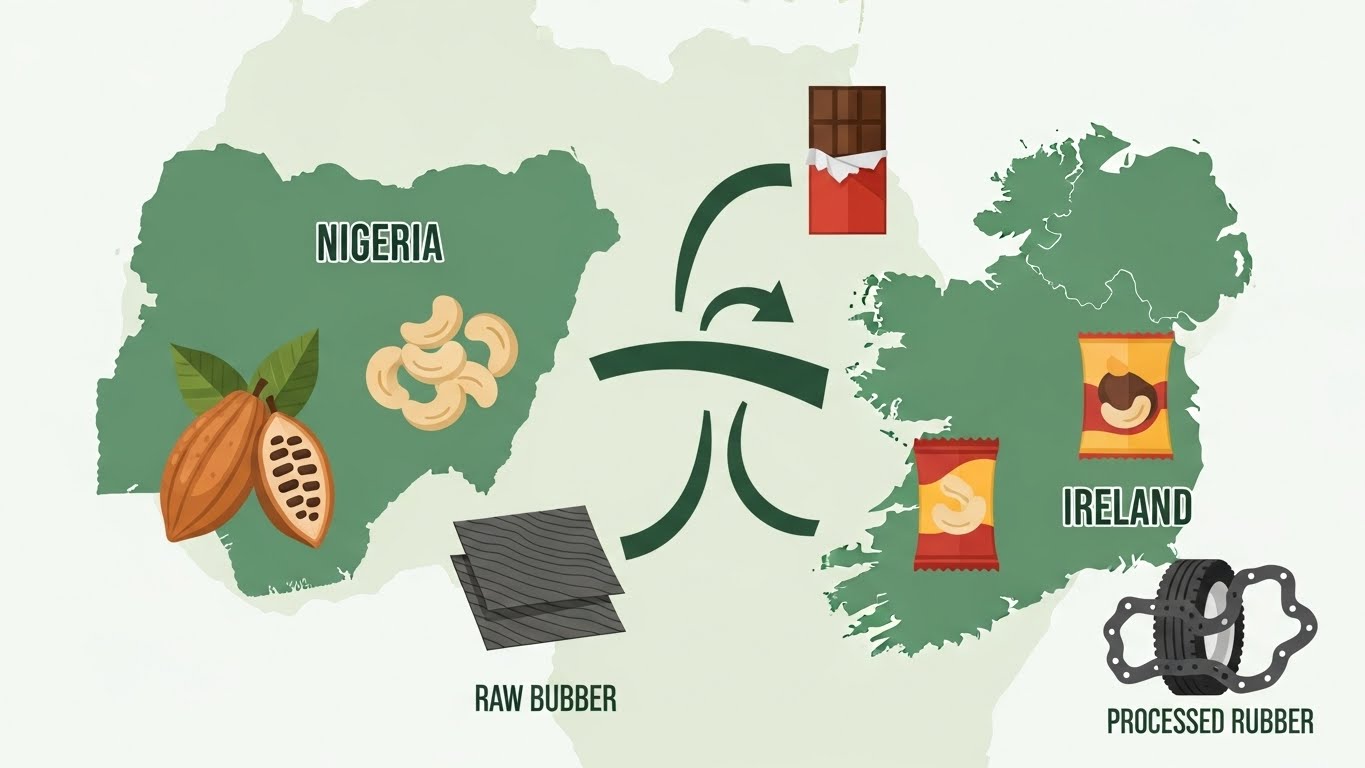
Ireland’s open economy and thriving food and beverage industries make it a prime destination for quality agricultural imports. With a population of 5 million and per-capita GDP among the highest in the EU, Irish consumers and processors demand steady supplies of cocoa, nuts, spices and industrial inputs—many of which must be sourced from overseas due to limited domestic production. Nigerian agribusinesses stand ready to fill these gaps, especially in cocoa beans, cashew nuts and natural rubber.
Ireland’s Import Needs
- Cocoa & Chocolate: Ireland’s confectionery sector imports roughly 100,000 tonnes of raw cocoa beans annually, sourcing from West Africa, Latin America and Asia. Cocoa is essential to Irish chocolate makers and bakeries, who value both volume and bean quality.
- Tree Nuts (Cashews): Irish demand for cashews has grown by ~4% per year—consumers enjoy them as healthy snacks and food processors use them in cereals, granolas and bars. Most cashews arrive from India and Vietnam, with room for new origins.
- Natural Rubber: While Ireland imports little raw rubber directly, its expanding medical, automotive and industrial-equipment sectors rely on EU distributors who source rubber globally. Ethical, traceable rubber is increasingly preferred.
What Nigeria Currently Exports
Nigeria’s top non-oil agricultural exports include:
- Cocoa beans: One of Africa’s leading producers, Nigeria ships ~200,000 tonnes per year. A fraction reaches Ireland via EU processors.
- Cashew nuts: Nigeria ranks among the world’s top cashew producers but exports mainly to Asia. Direct shipments to Europe (including Ireland) remain minimal.
- Natural rubber: Nigeria is Africa’s 3rd-largest rubber producer, yet only ~5% of its rubber reaches European markets outside Belgium and Germany.
Untapped Opportunities
- Premium Cocoa: By offering fully traceable, fermented cocoa beans (or semi-processed cocoa liquor), Nigerian exporters can attract Irish chocolatiers seeking distinctive bean origins for craft chocolates and premium desserts.
- Organic & Fair-Trade Cashews: Irish health-food brands and snack producers are eager for ethically sourced cashews. Nigeria’s large harvest can be marketed under organic or Fair-Trade labels to gain premium pricing.
- Sustainable Rubber: Ireland’s medical-device and specialty-equipment manufacturers require high-grade, ethically produced natural rubber. Nigerian rubber tapping cooperatives could pursue certifications (e.g. FSC, ISO 14001) to meet EU sustainability mandates
EU Import Standards & Buyer Expectations
All food and industrial imports into Ireland must comply with EU and Irish regulations on:
- Food Safety: Maximum pesticide residues, absence of aflatoxin in nuts and cocoa, proper lab testing, and certification (HACCP, ISO 22000).
- Traceability & Sustainability: Buyers increasingly demand organic, Rainforest Alliance/UTZ, Fair-Trade or equivalent certifications, plus documented supply chains.
Packaging & Labeling: Food products require ingredient lists, nutritional information, and origin labeling in English. Industrial goods (rubber) may need REACH compliance for chemical safety.
Export-Readiness Tips for Nigerian SMEs
- Obtain Certifications: Pursue GLOBALG.A.P., organic or Fair-Trade for food crops; ISO 14001 or forest-stewardship certification for rubber.
- Partner with EU Distributors: Work with Irish or EU brokers to navigate customs, logistics and buyer networks.
- Attend Trade Events: Showcase at Irish food fairs (e.g. Food & Hotel Ireland) or industrial expos (e.g. Med in Ireland) to meet key importers.
- Leverage EUNAP: List your products on the EU–Nigeria Agribusiness Platform to connect directly with verified Irish buyers, access procurement notices and trade leads.
- Start Small, Scale Fast: Begin with trial batches (e.g. 5–10 tonnes of specialty cocoa), build a track record, then expand volumes as relationships deepen.